
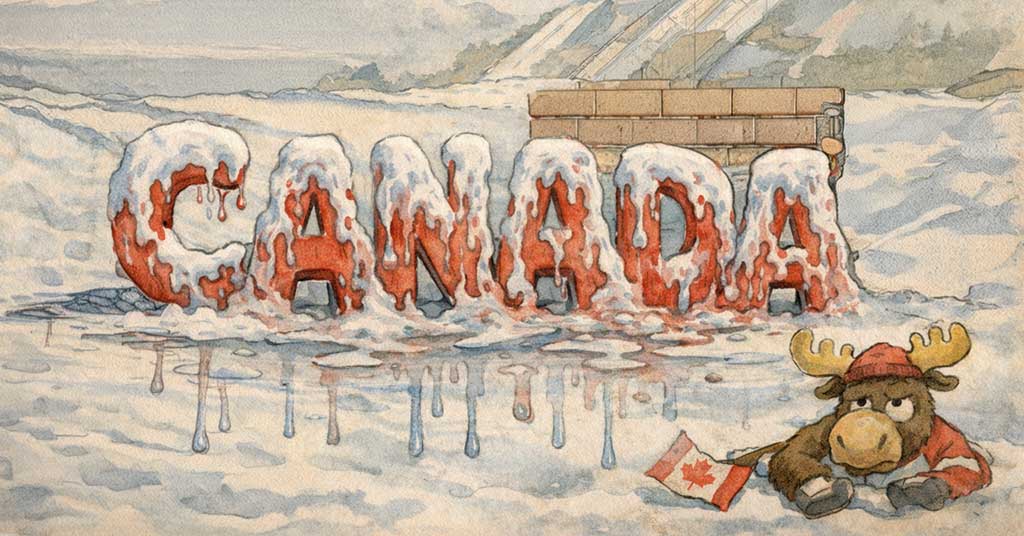
Is this the new normal for a once Winter Olympics powerhouse?

The 2026 Winter Olympics held in Milan and Cortina d’Ampezzo, Italy, have concluded. Let’s analyze the countries that excelled, the nations that struggled—and how Canada did.
Milano Cortina 2026 was a highly successful event in terms of overall viewership. “With 24 media rights-holders and more than 80 sublicensees, the Olympic Winter Games are reaching billions of people worldwide across all platforms,” the International Olympic Committee noted on its website on Feb. 18, and “broadcasters report that audience expectations are being surpassed in every time zone.”
Anne-Sophie Voumard, managing director of IOC Television and Marketing Services, pointed out that “two out of three people have watched coverage of the Games” in Italy, which was a “higher proportion than for Paris 2024.” It averaged 24.3 million viewers in the U.S. on NBCUniversal platforms as measured up to Feb. 16. That’s an increase of “88 per cent compared to Beijing 2022 at the same point.” Overall U.S. coverage “topped 20 million viewers for each of the first 11 days of competition.” In Asia, broadcasters reported “strong performances despite the time difference,” while coverage in “non-traditional winter sports markets” like Australia and Brazil reached “new highs.”
Streaming was also “driving significant growth.” As Voumard wrote, “NBCUniversal has recorded 11.2 billion minutes streamed, up 62 per cent compared to the total of all prior Winter Games combined. Warner Bros. Discovery reports triple-digit percentage growth in hours viewed compared to Beijing 2022, making this its most successful Winter Games ever on streaming platforms.”
Travel and tourism will likely be up, too. Oxford Economics suggested in a Jan. 15 research briefing that “Italy will welcome an estimated 66.7 million international arrivals in 2026—up 9.3 per cent year over year—while Milan will outpace the national trend with arrivals rising 10.7 per cent.” The final financial figures could end up being very impressive.
What happened at the Olympic events? There are two recognized measuring sticks with respect to medals: a country’s number of gold medals and total medals. Norway, a powerhouse nation that has finished first in 11 out of the 25 Winter Games, did it again at Milano Cortina 2026.
The Norwegians placed first with a record-breaking haul of 41 medals. This included 18 golds, which broke their own record set in Beijing 2022. The country’s best performer was Johannes Høsflot Klæbo. He won an astonishing six gold medals in cross-country skiing, which is the most by an athlete at a single Winter Olympics. For additional perspective, only seven countries (including his own) finished with more combined gold medals than Klæbo’s individual performance in Italy.
Other countries had great results, too.
The U.S. finished second with 33 total medals, including its best-ever tally of 11 golds. Italy ended up with a record-setting performance at home, including 10 gold medals and 30 total medals. The Netherlands won 10 gold medals and 20 overall. Germany, France, Switzerland and Japan earned over 20 total medals of varying colours. Brazil and Georgia both won their first Winter Olympic medals.
How did Canadian athletes do? As the French like to say, “comme ci, comme ça.”
Canada finished with 21 medals—five gold, seven silver and nine bronze. We ended up in 11th place in gold medals and eighth place in total medals. The former was the same position we held in Beijing, albeit with one additional gold medal earned in Italy. We won five fewer total medals in Italy as opposed to Beijing, and sat four places lower in the country rankings. This is Canada’s weakest finish in total medals since Albertville 1992—and the first time we’ve been out of the top five at a Winter Olympics since Nagano 1998.
What happened, exactly?
The biggest reason was a poor start. Canada didn’t win a gold medal until freestyle skier Mikaël Kingsbury finished first in men’s dual moguls on Feb. 15. That was the ninth day of competition, which is our longest stretch at a Winter Olympics since Calgary 1988—and we didn’t win any golds that year. Meanwhile, the Canadian men’s and women’s hockey teams both lost by identical 2-1 scores in overtime to the American men’s and women’s teams in the gold medal games. While we’re still one of the best countries in ice hockey, we’re not the best anymore. A gold medal in this sport is no longer guaranteed.
Which isn’t to say Canada didn’t have some good showings. Our country won a gold medal in men’s curling, and its first medal (bronze) of any colour in women’s curling since Sochi 2014. Courtney Sarault won two silver and two bronze medals in short-track speed skating. Valérie Maltais won a gold and two bronze medals in speed skating. Several athletes won two individual medals, including Kingsbury, Megan Oldham and Ivanie Blondin.
The overall results just weren’t good enough. While there’s no question that Canada has vastly improved since the first Winter Olympics were held in Chamonix, France, in 1924, this performance was a small setback. Canada’s decades-long status as a top-tier country in winter sports is now in some jeopardy.
What can be done? Canadian Olympic Committee chief executive David Shoemaker’s solution, as he said at a press conference, was that “core funding for national sports organizations has not increased in 20 years. It needs to.”
That’s nice to suggest in theory, but it could become very costly in practice. Any level of increased funding has to be used wisely and tied to performance, training and developing the next generation of athletes. If not, the 2030 Winter Olympics in the French Alps could lead to further heartbreak for Team Canada.
Michael Taube is a political commentator, Troy Media syndicated columnist and former speechwriter for Prime Minister Stephen Harper. He holds a master’s degree in comparative politics from the London School of Economics, lending academic rigour to his political insights.
Explore more on the Olympics
The views, opinions, and positions expressed by our columnists and contributors are solely their own and do not necessarily reflect those of our publication.
Troy Media empowers Canadian community news outlets by providing independent, insightful analysis and commentary. Our mission is to support local media in helping Canadians stay informed and engaged by delivering reliable content that strengthens community connections and deepens understanding across the country.

