
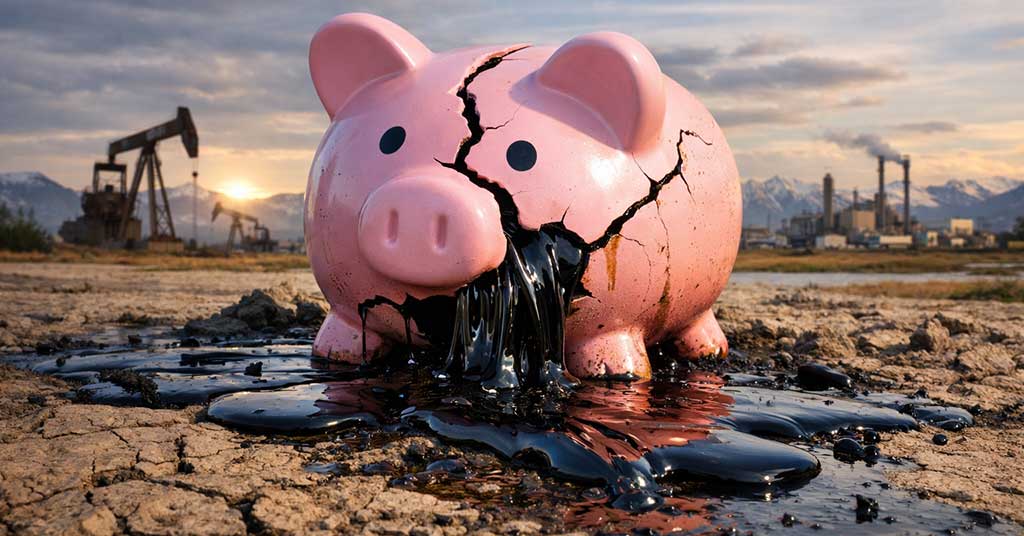
The last province known for fiscal discipline is now spending like Ottawa

The Alberta government’s recent budget confirmed a nagging suspicion that many concerned Canadians have had for some time: the era of fiscal responsibility in Canada is truly over.
The federal government hasn’t been fiscally responsible with Canadians’ tax dollars for some time, racking up large deficits and dramatically increasing government debt since 2015.
But some provinces, led by Alberta under Premier Danielle Smith and New Brunswick under former premier Blaine Higgs, had been controlling spending and paying down debt.
Those provincial examples of fiscal restraint have now disappeared. Higgs lost re-election in the fall of 2024 and New Brunswick’s finances are now in shambles.
Smith is still in office, but over the past two years her government has let spending get out of control.
Consider the budget Smith’s finance minister, Nate Horner, delivered late last month.
Budget 2026 raises spending significantly, hikes taxes and includes a jaw-dropping $9.4 billion deficit, which represents nearly 13 per cent of overall government revenue.
The Alberta government was quick to blame the falling price of oil for its present budget woes. But the sheer size of the deficit has everything to do with the government’s unwillingness to control spending.
Health care spending is set to rise nearly six per cent and spending on education is up by seven per cent. Both of those increases, while potentially politically popular, are unsustainable, given that inflation remains below three per cent.
Over the past two years alone, government spending has increased from $74.1 billion to $83.9 billion, an increase of 13.2 per cent, or an average of 7.6 per cent per year.
That’s a far cry from fiscal restraint.
Then there’s a whole host of tax increases, imposed by a government that has positioned itself as the defender of taxpayers’ interests. A provincial property tax hike alone will cost taxpayers nearly $500 million this year, while a new tax was added on car rentals and vehicle registration costs were hiked.
The budget tries to appease fiscal conservatives by insisting that Alberta’s present tax structure saves individuals and businesses some $17 billion a year, but that’s cold comfort in the wake of Horner’s declaration that Albertans might have to give up some of that fiscal advantage to “get off the roller-coaster” caused by dependency on resource revenues.
The Alberta government must get off the roller-coaster of oil revenue dependency, but that needs to come through actual cuts to government spending, not through ongoing deficits or tax hikes.
Even with a decline in oil revenue this year, the minister is still projecting royalties to be nearly $10 billion. No other province has that kind of resource revenue. And even according to Horner, a provincial sales tax of five per cent would generate just $6 billion in tax revenue.
In other words, oil revenue, even at this year’s lows, still gives the government much more money than a PST would.
The government’s deficit spending, then, is not caused by a lack of a PST. Rather, had the government not increased spending at such a rapid pace over the past two years, the deficit would be much smaller, if not eliminated altogether.
If Alberta held spending at levels from just two years ago, the books would be balanced. And even if the government froze spending at last year’s levels, the deficit would be half its current size.
By refusing to control spending, the UCP government is also breaking its own legislation, which doesn’t allow for more than three consecutive budget deficits, with the budget projecting red ink as far as the eye can see.
Horner didn’t seem all that repentant about breaking the UCP’s own budgeting rules.
“We created these rules, and I’m breaking them,” said Horner. “So, it bothers nobody more than it does me.”
Every Albertan should be bothered by Horner’s poor budget choices. But Horner is one in just a long list of provincial finance ministers who have chosen to run big deficits and hike taxes instead of getting government spending under control.
If Canada doesn’t want to end up back in a 1990s-style debt crisis, leaders at both the federal and provincial levels must act. The kind of spending growth now appearing in provincial budgets like Alberta’s is exactly the behaviour that pushed Canada into a fiscal crisis three decades ago. It’s time to get spending under control, with spending freezes and actual cuts put on the table. If our leaders don’t act now, the choices Canadians face will be even more painful in the future.
Placing a greater burden on the backs of future taxpayers cannot be the answer to today’s tough budgeting choices. It may be the easiest thing for politicians to do, but it isn’t the right thing for them to do.
Jay Goldberg is a fellow with the Frontier Centre for Public Policy.
Explore more on Alberta budget, Alberta debt and deficit, Alberta taxes, Smith government
The views, opinions, and positions expressed by our columnists and contributors are solely their own and do not necessarily reflect those of our publication.
Troy Media empowers Canadian community news outlets by providing independent, insightful analysis and commentary. Our mission is to support local media in helping Canadians stay informed and engaged by delivering reliable content that strengthens community connections and deepens understanding across the country.

